Posts

Showing posts with the label Economics

Enlightenment Now By Steven Pinker

Image
If you think the world is coming to an end, think again: people are living longer, healthier, freer, and happier lives, and while our problems are formidable, the solutions lie in the Enlightenment ideal of using reason and science. Is the world really falling apart? Is the ideal of progress obsolete? In this elegant assessment of the human condition in the third millennium, cognitive scientist and public intellectual Steven Pinker urges us to step back from the gory headlines and prophecies of doom, which play to our psychological biases. Instead, follow the data: In seventy-five jaw-dropping graphs, Pinker shows that life, health, prosperity, safety, peace, knowledge, and happiness are on the rise, not just in the West, but worldwide. This progress is not the result of some cosmic force. It is a gift of the Enlightenment: the conviction that reason and science can enhance human flourishing. Far from being a naïve hope, the Enlightenment, we now know, has worked. But more than ever, i...
The Great Wealth Transfer: Baby Boomers

Image
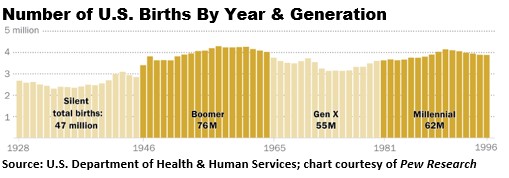
The baby boomers capitalized on an unprecedented 40-year rally in stock and housing prices. Now, those babies are bequeathing on an equally epic level. According to financial market intelligence firm Cerulli and Associates , baby boomers and the Silent Generation (preceding boomers) will pass down $84.4 trillion in assets through 2045, with $72.6 trillion going directly to heirs. The Bank Administration Institute says it will “end up as the greatest transfer of wealth in history.” So, how, exactly, do tens of millions of people pass on tens of trillions of dollars? Let’s examine the situation. Boomers are handing down the lion’s share of the wealth — $53 trillion or 63% of all transfers. The Silent Generation will hand down $15.8 trillion, mostly over the coming decade. Ultra-high-net-worth households in the top 1.5% will account for 42% of the Great Wealth Transfer — about $35.8 trillion. That last part shouldn’t be surprising. The rich have always passed estates down to their heirs,...

Freddie Mac Mortgage Rates

Image
 Up from 6.09% on Feb. 3, 2023.

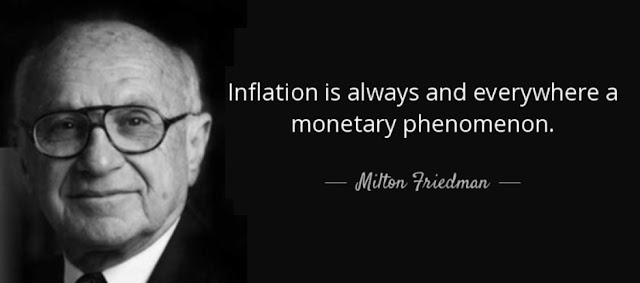
Inflation is a Monetary issue

Image
Two recent articles I've come across explain the phenomenon of inflation very well. Or pick up a book if you want more depth. Money Mischief would be a place to start.  Milton Friedman’s priceless lessons on inflation Inflation – it’s on everyone’s mind. Everyone is talking about how inflation is the highest it has been in forty years. With the slowing economy, what was said to be a “transitory” phase has turned into “stagflation.” Some are blaming the government. The government is blaming the war. Republicans are blaming the Democrats, and the left is blaming greedy corporations. As the blame game and alarm rage, it remains a fact that most of us don’t know what inflation is. Few know what causes it. Fewer know how it can be curbed. Under the circumstances, it pays to listen to the respected American economist Milton Friedman as he deconstructs this “alarming” phenomenon. The Nobel Laureate, speaking at the University of San Diego and the San Diego Chamber of Commerce in 1978, bu...

Economic Projections: Like the Weather Forecast

Image
Why economic forecasts are unreliable. Or maybe it's the CBO. The Fed and most economist have not done very well, historically. This chart shows projections for inflation compared to actual inflation. 

America's Horrific Long-Term Fiscal Forecast

Image
S ome people think America's main fiscal problem is the gap between the two lines. In other words, they worry about deficits and debt. But the real problem is government spending. And that's true whether the spending burden is financed by taxes, borrowing, or printing money. Full story here .

The Law of Supply and Demand: Housing Sales Fall

Image
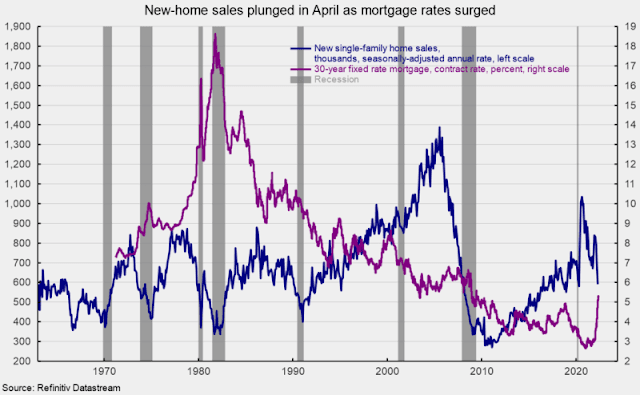
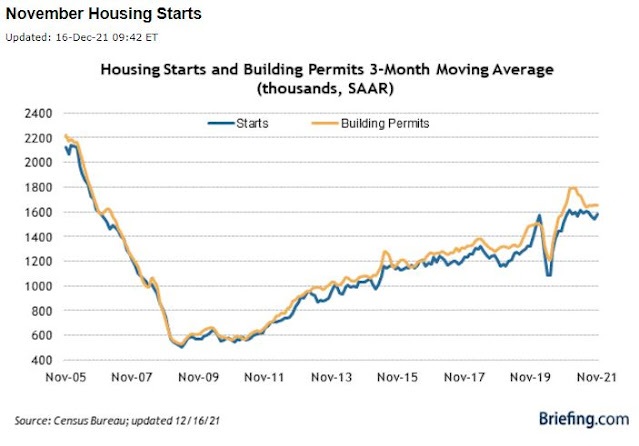
A normal supply and demand curve indicates that as prices increase, demand will moderate or decline, until the curve reaches a new equilibrium. That is what is happening this year in housing.  Sales of new single-family homes plunged in April, declining 16.6 percent to 591,000 at a seasonally-adjusted annual rate from a 709,000 pace in March and just slightly ahead of the 582,000 pace at the bottom of the lockdown recession.  The April drop follows a 10.5 percent decline in March, a 4.7 percent fall in February, and a 1.0 percent drop in January. The four-month run of decreases leaves sales down 26.9 percent from the year-ago level (see chart). Meanwhile, 30-year fixed rate mortgages were 5.3 percent in late May, up sharply from a low of 2.65 percent in January 2021. The median sales price of a new single-family home was $450,600, up from $435,000 in April (not seasonally adjusted). The gain from a year ago is 19.6 percent versus a 21.0 percent 12-month gain in April. On a 12-...

How to Buy Happiness

Image
 

Does Money Make You Mean?

Image
 

Could Your Language Affect Your Ability to Save?

Image
 

Inflation remains at high levels; 50% windfall tax proposed on oil

Image
With inflation running at percent 8 percent annually, according to CPI numbers released March 10, and energy prices at nearly all-time highs, some in Congress want to impose a windfall profits tax on crude oil.  The Consumer Price Index (CPI) rose 0.8% month-over-month (m/m) in February, in line with the Bloomberg consensus estimate, and up from January's unrevised 0.6% gain. The core rate, which strips out food and energy, increased 0.5% m/m, matching forecasts, and slightly below January's unadjusted 0.6% rise.  Compared to last year, prices were 7.9% higher for the headline rate—again the fastest pace since 1982—in line with estimates and an acceleration from the prior month's unrevised 7.5% rise. The core rate was up 6.4% y/y, matching projections, and rising from January's unrevised 6.0% rise. Initial jobless claims came in at a level of 227,000 for the week ended March 5, versus estimates calling for 217,000, and above the prior week's upwardly-revised 216,000...

Leading Indicators snap positive streak, existing home sales surprisingly jump

Image
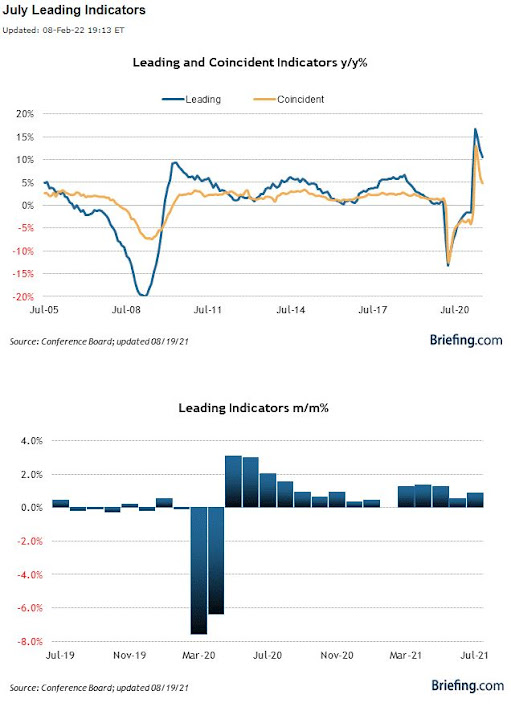
The Conference Board's  Leading Economic Index  (LEI) for January declined 0.3% month-over-month (m/m), compared to the Bloomberg consensus estimate calling for a 0.2% gain, and following December's negatively-revised 0.7% increase. The LEI was negative m/m for the first time since February 2021, due largely to the negative net contributions from jobless claims, consumer expectations, stock prices, and average workweek, which more than offset positive reads for the interest rate spread and ISM new orders. Existing home sales  jumped unexpectedly by 6.7% m/m in January to an annual rate of 6.5 million units, versus expectations of 6.1 million units, which would have matched December's downwardly-revised rate. Existing home sales were higher in each of the major U.S. regions, while y/y sales were mixed as the Northeast and West saw declines, the South saw a modest increase, and the Midwest was flat. Sales of single-family homes jumped m/m but were down y/y, while purch...

Inflation Remains High, Jobless Claims Down, Earnings Update

Image
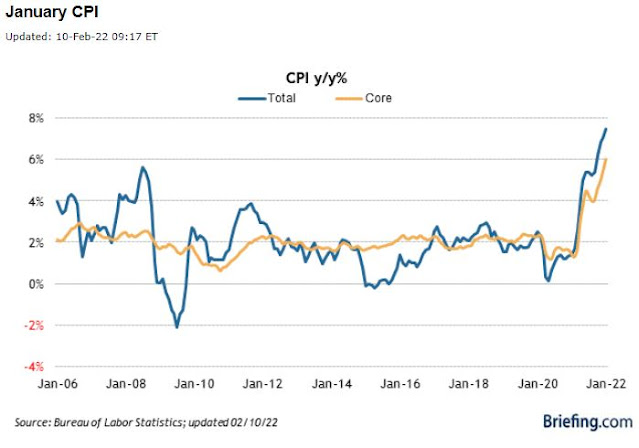
The  Consumer Price Index  (CPI) rose 0.6% month-over-month (m/m) in January, above the Bloomberg consensus estimate of a 0.4% increase, and following December's upwardly-revised 0.6% gain. The  core rate , which strips out food and energy, also increased 0.6% m/m, topping forecasts of a 0.5% gain, and matching December's unadjusted rise. Compared to last year, prices were 7.5% higher for the headline rate—the fastest pace since 1982—above estimates of a 7.3% increase and an acceleration from the prior month's 7.0% rise. The core rate was up 6.0% y/y, above projections of a 5.9% increase, and following December's unrevised 5.5% rise. Weekly initial jobless claims  came in at a level of 223,000 for the week ended February 5, versus estimates calling for 230,000, and down from the prior week's upwardly-revised 239,000 level. The  four-week moving average  declined by 2,000 to 253,250, and  continuing claims  for the week ended January 29 was unchang...

Study Finds Enhanced Jobless Benefits Prolong Unemployment

From the Daily Signal By Patrick Tyrrell & Anthony Kim If common sense and reports from thousands of employers weren’t enough, a recent National Bureau of Economic Research  paper  found conclusively that paying people not to work during the COVID-19 pandemic was why many of them remained unemployed. That  shouldn’t  come as a surprise to anyone, except that last year, major news reports were saying the opposite was true, before the evidence was in. Leave it to the American media to get something important wrong. By comparing states that discontinued the overly generous unemployment benefit programs early against those who retained the payouts for the life of the program, the National Bureau of Economic Research researchers showed: [I]n states that eliminated [the two pandemic-related expanded unemployment benefits programs] in June 2021, the share of 25-to-54-year-old unemployed workers who found employment rose by about 14.4 percentage points in July and August...

When the Musical Chairs Music Stops

Image
From " The Truths We Dare Not Speak " by Victor David Hanson, Phd.  Everyone knows the government cannot keep running up astronomical annual deficits. It is piling up a near $30 trillion national debt, printing trillions of dollars—and hoping to keep inflation down to 7 percent per year. Everyone knows that, and no one wishes to talk, much less do anything, about it. Instead, we simply will go on redistributing money, inflating the economy, and hoping that the middle classes are naïve enough to believe that their inflated paychecks outpace their greater inflationary costs that, in truth, have more than wiped out all their wage gains. When the interest rate hikes invariably come—the longer we wait, the worse will be the reckoning—we will again know the stagflation of the 1970s and 1980s. The only calculus the Democrats weigh is whether they can print their way to a semblance of normality through 2022, in hopes the helium-over-inflated economy blows up only after the elections....

U.S. May Consume More, But Also Produces More

Image
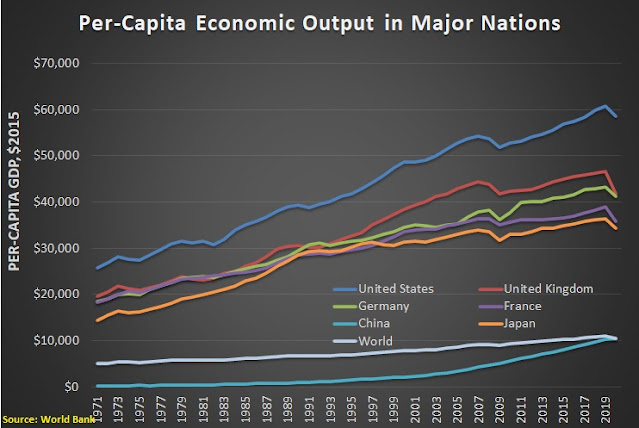
This chart shows that Americans not only consume more, but we also produce more.  The bottom line is that it's good to be part of western civilization. But it's especially good to be in the United States. David Harsanyl of National Review :  More than anything, it is the ingrained American entrepreneurial spirit and work ethic that separates us from Europe and the rest of the world. ...Europe, despite its wealth, its relatively stable institutions, its giant marketplace, and its intellectual firepower, is home to only one of the top 30 global Internet companies in the world (Spotify), while the United States is home to 18 of the top 30. ...One of the most underrated traits we hold, for instance, is our relative comfort with risk — a behavior embedded in the American character. ...Americans, self-selected risk-takers, created an individual and communal independence that engendered creativity.  ...Because of a preoccupation with “inequality” — one shared by the modern Ameri...

Stupid Government Policies Will Not Help Inflation

Following months of rumors and wrangling in the press, the White House has laid out its first concrete plans to reduce consumer prices - financing independent meat processing ventures. The plan goes against everything taught in Ecnomics 101. Government regulation, price controls, and/or subsidies can only make the problem worse, not better. This plan will probably have very little affect on the overall food industry. It seems more political optics, if anything. The funds will come from the American Rescue Plan, a billed signed into law earlier this year.  The Action Plan cites increased market share - four processors control 85%, 54% and 70% of the beef, poultry and pork markets, respectively - leading to fatter margins for middlemen, lower prices for ranchers and higher costs for consumers. The White House has directed $375M to grants for new projects at independently owned processors; $275M will go towards direct loans; $100M towards loan guarantees; $100m towards workforce train...

Holiday-Shortened Week Begins with Losses

Image
U.S. equities began the holiday-shortened week on a down note, as uncertainty regarding the ultimate impact of the omicron variant persists. All the major sectors were in the red, led by Financials, Consumer Discretionary and Information Technology, while Health Care issues were also lower despite Moderna's announcement of positive results of its COVID booster against omicron.  The markets also grappled with dampened expectations (in my opinion, this should be positive) regarding the passing of President Biden's social spending and climate plan after Democratic senator Joe Manchin said he won't support the bill.  In economic news, leading indicators accelerated more than expected and posted the ninth-straight monthly gain. In other equity news, Oracle Corporation confirmed last week's reports that it agreed to acquire Cerner Corporation for an equity value of $28.3 billion.  Treasuries were mixed, and the U.S. dollar was little changed, while crude oil prices tumbled, a...

Stocks Mixed as Markets Digest Data and Monetary Policy Decisions

Image
Treasuries are mixed after seeing some pressure yesterday as the Federal Reserve expectedly announced that it will speed up the tapering of its monthly asset purchases. The yield on the 2-year note is declining 6 basis points to 0.61%, and the yield on the 10-year note is decreasing 3 bps to 1.43%, while the 30-year bond rate is ticking 1 basis point higher to 1.87%. Many stocks are up today as well.  Why? First of all, the market loves certainty. Knowing what to expect on the macroeconomic level next year goes a long way for investors that are closely watching their portfolios, as well as an assurance from the Fed that it is taking inflation seriously. Powell also balanced his rates outlook with a strong dose of optimism about demand and income, and confirmed that "we're making rapid progress toward maximum employment." Weekly initial jobless claims came in at a level of 206,000 for the week ended December 11, versus the Bloomberg consensus estimate of 200,000 and compar...

Inflation: Fed totally missed the mark on its transitory view

Image
The Consumer Price Index (CPI) rose 0.8% month-over-month (m/m) in November, just above the Bloomberg consensus estimate of a 0.7% increase, and following October's unrevised 0.9% gain. The core rate, which strips out food and energy, increased 0.5% m/m, in line with forecasts, after October's unadjusted 0.6% rise. Y/Y, prices were 6.8% higher for the headline rate—the fastest pace since 1982—matching estimates, and following the prior month's 6.2% increase. The core rate was up 4.9% y/y, in line with projections, and following October's unrevised 4.6% increase. Key Factors The food index was up 0.7% month-over-month. On an unadjusted basis, the food index was up 6.1% year-over-year. The energy index was up 3.5% month-over-month. On an unadjusted basis, the energy index was up 33.3% year-over-year. The shelter index was up 0.5% month-over-month. On an unadjusted basis, the shelter index was up 3.8% year-over-year (which many observers think is grossly understated). The ...